IBNS 2027 Keynote SpeakersThe Next Wave of Behavioral Neuroscience: Nassau, The Bahamas - June 21-25, 2027
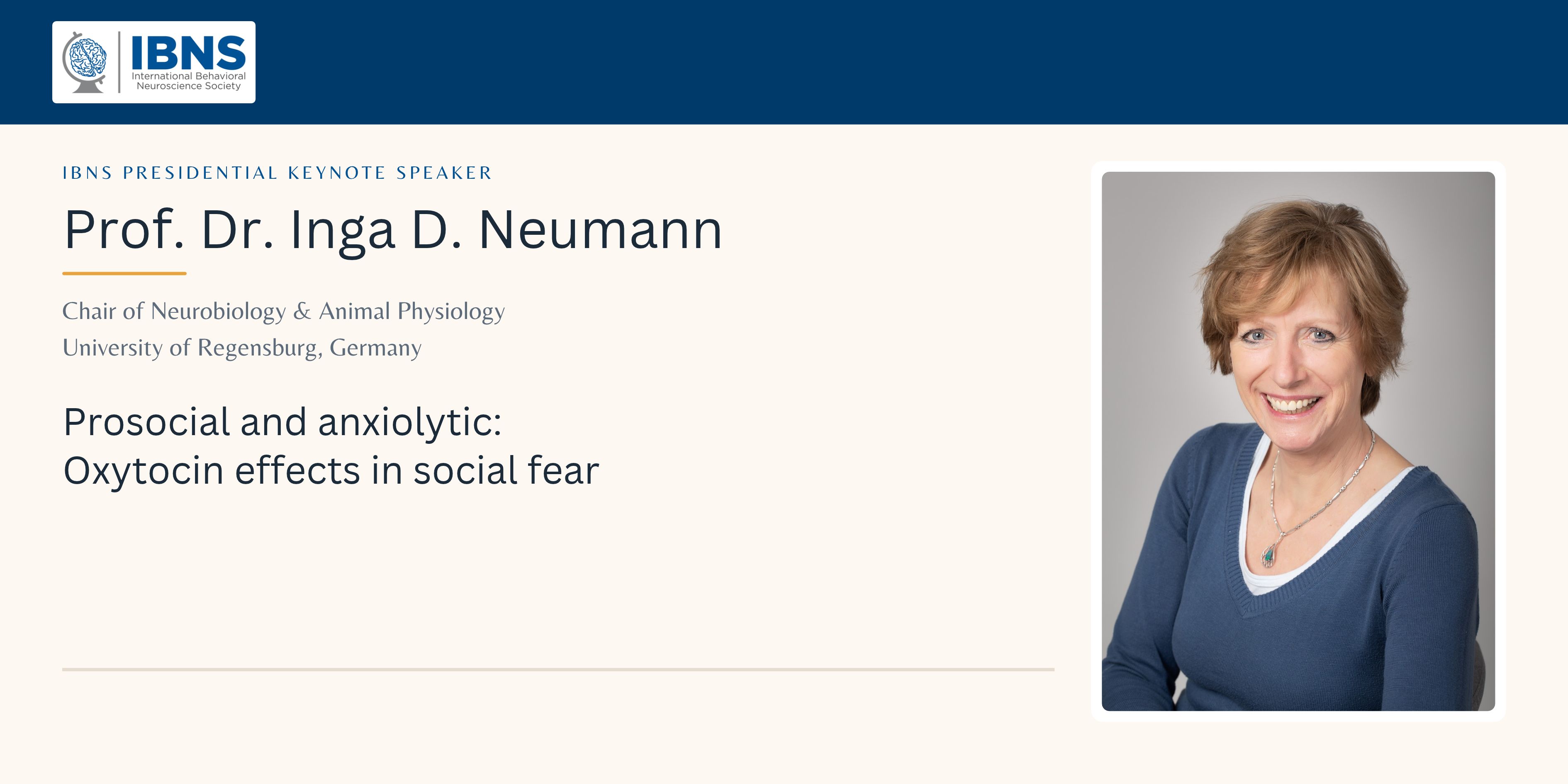
Inga Neumann was born in Jena, Thuringia, in what was then East Germany, and studied Biology at the former Karl-Marx-University of Leipzig. During her doctoral studies in Leipzig, she began investigating brain neuropeptides, focusing specifically on the stimuli that trigger their central release and their functions within the brain. Following a postdoctoral period at the University of Calgary, Canada, from 1992 to 1994, she worked at the Max-Planck Institute for Psychiatry in Munich, where she sharpened her research profile and examined the role of oxytocin and vasopressin in stress-related physiology and behaviour. With the support of a Heisenberg stipend from the Deutsche Forschungsgemeinschaft (DFG), she focused on peripartum adaptations of stress responses and the contribution of brain neuropeptides. In 2001, she was appointed Full Professor of Animal Physiology and Neurobiology at the University of Regensburg, Germany. Since then, her research is focusing on the role of various brain neuropeptides — such as oxytocin, vasopressin, CRF and neuropeptide S — and their neuronal circuits in socio-emotional behaviours under physiological and psychopathological conditions, using relevant rat and mouse models. She is currently particularly interested in the regulation of social fear and the contribution of oxytocin actions within the lateral septum. In this context, she combines complementary methods including pharmacology, epigenetics, chemogenetics, optogenetics, and imaging with behavioural, molecular and histological analyses. From 2006 to 2016, she has directed the International Master Programme "Experimental and Clinical Neuroscience". Between 2017 and 2026, she has been speaker of the DFG-funded Graduate Programme "Neurobiology of Socio-Emotional Dysfunctions". She has published more than 200 papers in international journals with more than 40,000 citations and an h-index of 113. In 2019, she was awarded the ECNP Neuropsychopharmacology Award in Copenhagen.
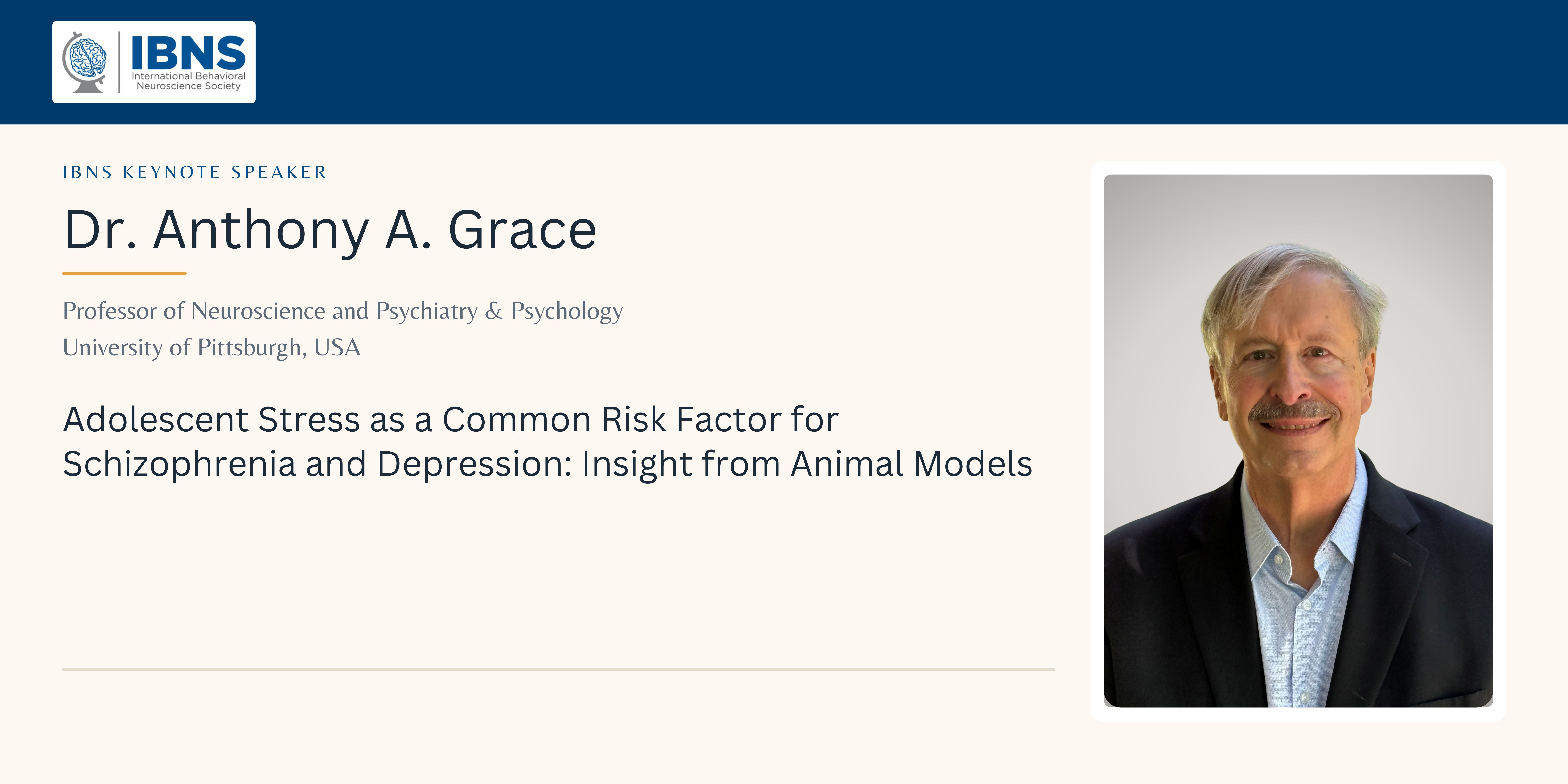
Dr. Anthony A. Grace is a Distinguished Professor of Neuroscience and a Professor of Psychiatry and Psychology at the University of Pittsburgh. He has been involved in translational research related to the dopamine system as it relates to the pathophysiology of psychiatric disorders for over 45 years. His early work pioneered the mode of action of antipsychotic drugs and the identification and characterization of dopamine-containing neurons. Currently, Dr. Grace’s work involves the role of stress in pathophysiology, novel treatments for schizophrenia and its prevention, and the role of dopamine in affective disorders. He has published more than 400 articles and is cited more than 65,000 times (H index 122). Dr. Grace has received several awards for his research, including the William K. Warren Award for Excellence in Schizophrenia Research, the Paul Janssen Schizophrenia Research Award and the Lilly Basic Scientist Award from the CINP, the Efron Award and the Axelrod Award from the ACNP, the Gold Medal award from the SOBP, and the Outstanding Basic Research award, Distinguished Service Award, and Outstanding Translational Research Award from the SIRS. He is also the Editor-in-Chief of the SIRS journal Schizophrenia and past editor of the International Journal of Neuropsychopharmacology. Dr. Grace is one of a handful of individuals that not only performs important basic research, but can integrate this work into testable models relevant to the human condition. |